Nicaragua Myths vs Reality: What People Get Wrong About Central America
Updated August 2026
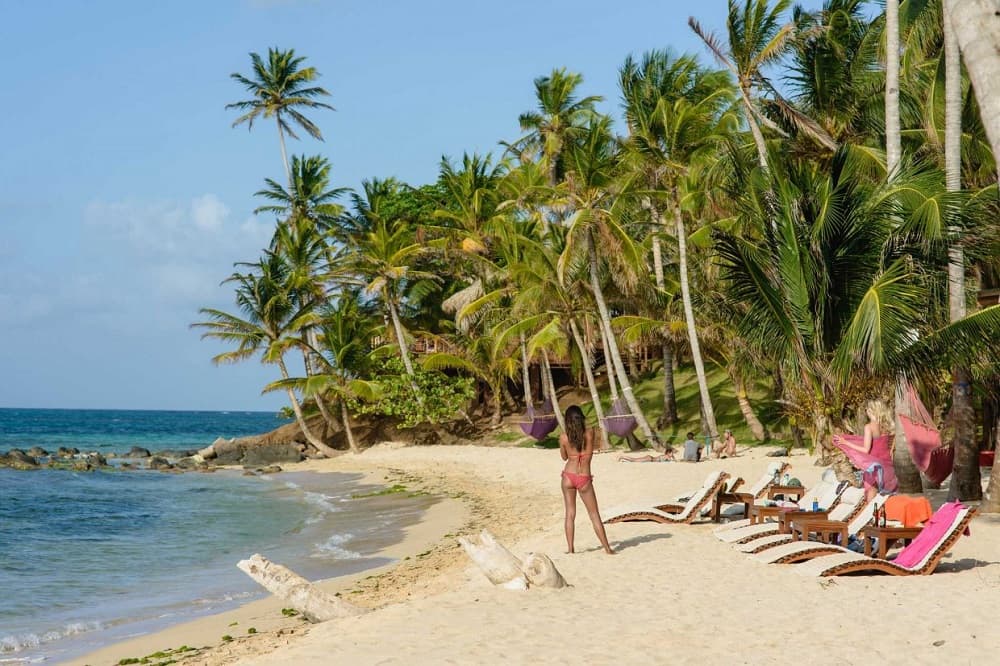
Most of what people think they know about Nicaragua is either decades out of date, borrowed from a different country entirely, or based on a single sensational headline that never got revisited. That is a normal way to end up with a wrong picture. It is also worth correcting before it stops someone from looking seriously at a country that, on the actual numbers, has a genuinely strong case to make.
Here are the myths that come up most often, checked against what is actually true.
Myth: Nicaragua is dangerous
This is the big one, and it is the most out of date. Nicaragua's homicide rate runs around 6 per 100,000 people, one of the lowest in Central America and lower than a long list of major US cities. It sits well below Honduras, well below Guatemala, and below Costa Rica, whose own crime numbers have climbed in recent years as regional trafficking patterns have shifted.
The confusion usually traces back to the 1980s, when Nicaragua's civil conflict made international news and cemented an image that a lot of people never updated. That was over 35 years ago. The Nicaragua a visitor experiences today, in Granada, León, San Juan del Sur, or Managua, is calm, walkable, and about as eventful as any other Central American capital region. Petty theft exists, the way it does in any tourist area anywhere in the world. Violent crime against foreigners is genuinely rare.
Myth: Nicaragua is basically the same as its neighbors
People who have never spent time in the region often mentally merge "Central America" into a single place, and assume whatever they have heard about one country, good or bad, applies to all of them. It does not. Honduras, El Salvador, Guatemala, Costa Rica, Panama, and Nicaragua are six distinct countries with different economies, different crime profiles, different costs of living, and different day-to-day realities. Nicaragua's safety numbers, in particular, do not resemble its northern neighbors at all, and its cost of living runs meaningfully lower than Costa Rica or Panama.
Judging Nicaragua by a headline about a different country is a common and understandable mistake. It is still a mistake.
Myth: There is nothing modern here
The image a lot of people carry is dirt roads, no internet, and a country stuck decades behind. That has not been accurate for a while, and the pace of building over the past two years has made it even less accurate. Fixed broadband in Nicaragua now averages around 67 Mbps, fast enough for video calls and remote work without a second thought. The scale of what is currently under construction is worth spelling out, because it rarely makes it into the version of Nicaragua people picture.
Roads. La Costanera, the new Pacific coastal highway, is being built in phases with financing from the Central American Bank for Economic Integration and, for its second phase, from China. The first stretch, 29.5 kilometres connecting El Naranjo to Playa El Remanso near San Juan del Sur, opened in November 2025. A third section linking El Naranjo to Masachapa followed in July 2026. When finished, the Ministry of Transport and Infrastructure says the full route will connect 64 Pacific beaches that used to take hours of rough driving to reach. Around Managua, the Carretera Nueva a León is being widened from four to six lanes along a 13-kilometre stretch, and a new overpass at Nejapa on the old León highway is under construction to ease one of the capital's worst chokepoints.
Airports. The Augusto C. Sandino International Airport in Managua began a $55.3 million runway expansion in December 2025, extending the runway by 858 metres and upgrading the airport from Category 4D to Category 4E, a classification that allows it to receive larger aircraft on direct routes from Europe, North America, and beyond. Work is targeted for completion in October 2026. North of the capital, a second, larger airport at Punta Huete is under construction from the ground up, with 2026 funding of roughly 7.29 billion córdobas (about $199 million) and a targeted opening in October 2028.
Hospitals. New public hospitals have opened at a steady clip: a major new high-complexity hospital in León in September 2025, described by health officials as the largest of its kind in Central America, plus new hospitals in Nueva Guinea, Ocotal, Granada, and San Rafael del Sur within the same year. Between 2007 and September 2025, 34 new hospitals were built nationwide, bringing the total number of functioning public hospitals to 77.
None of this is a country waiting to develop. It is a country visibly building, on a timeline you can track in the news rather than take on faith.
Myth: The economy is stagnant
Nicaragua's economy has been growing steadily rather than standing still. The Central Bank of Nicaragua and IMF figures both put growth at 3.6 percent in 2024 and 3.8 percent in 2025, with official projections for 2026 in the 3.5 to 4.5 percent range. Exports closed 2025 at a record high, above $8.7 billion. Trade with China has expanded quickly since the free trade agreement took effect in January 2024, with bilateral trade up more than 78 percent since. That has meant a wider range of affordable imported goods reaching Nicaraguan shelves, alongside the infrastructure financing that has funded several of the projects above. None of this is the profile of an economy standing still.
Myth: You will be completely on your own if something goes wrong
Some people picture moving to Nicaragua as stepping off the map entirely. In practice, the expat community is real, active, and easy to find. The Canadian Expats in Nicaragua Facebook group alone has around 8,000 members, with people at every stage from early research to a decade on the ground. Granada and San Juan del Sur both have established, English-accessible communities with doctors, lawyers, and service providers who work with foreigners regularly. Nicaragua's public healthcare system is also unusually generous by regional standards: it is available not just to citizens and residents but to tourists and visitors too, a policy choice that is fairly unusual in the region.
Myth: Foreigners cannot really own property here
This one is backwards. Nicaragua has one of the most straightforward foreign property ownership frameworks in the region. Foreign nationals can buy and hold titled residential property directly, in their own name, on exactly the same terms as Nicaraguan citizens: no special permits, no local partner requirement, no residency prerequisite, no trust structure. Compare that to Mexico, where foreign buyers in restricted zones need a fideicomiso, or other countries in the region with more layered ownership rules. Nicaragua actively welcomes foreign capital, and the property market reflects it.
Myth: The expat scene has gotten too big and pushed out the locals
The opposite concern from the one above, but also common, especially from people who have read about what happened in parts of Costa Rica or Mexico, where a wave of foreign buyers changed the character and cost of certain towns for the people who already lived there. Nicaragua has not gone through that. Foreign buyers and long-term visitors remain a modest presence relative to the overall population, even in the most popular towns. The relationship between newcomers and long-time residents here stays closer to neighbors than to landlord and tenant, and Nicaraguans consistently describe genuine warmth toward foreigners who show up with curiosity and respect.
Myth: You need to be fluent in Spanish to survive
Granada and San Juan del Sur both function comfortably in English, with established expat infrastructure and bilingual service providers. Outside those two areas, basic conversational Spanish goes a long way, and most people report picking it up faster than expected simply through daily immersion. Fluency is not a prerequisite to arrive. It becomes more useful the longer you plan to stay.
Myth: The tax benefits are too good to be true
Nicaragua genuinely uses a territorial tax system, and it genuinely does not tax income earned outside the country. Pension income, Social Security, foreign salaries, foreign dividends: none of it is touched by Nicaraguan tax. This is a real, structural, and well-established feature of the tax code, not a loophole or a temporary policy. Your home country's tax obligations are a separate question that depends on your citizenship and residency status, and that part is always worth checking with a cross-border accountant. But the Nicaragua side of the equation is exactly as favorable as it sounds.
The honest picture
None of this means Nicaragua is flawless or a fit for absolutely everyone. Rural infrastructure still lags city infrastructure. Paperwork and bureaucratic processes take longer than North American timelines, even when the people running them are approachable and the process itself is simple. Serious specialist medical care outside Managua requires travel. These are real, ordinary trade-offs, the kind every country has.
What is not real, or at least not current, is the picture built on 1980s headlines, confusion with other countries in the region, and a general assumption that a lower-cost country must also be a lower-quality one. On safety, infrastructure, property rights, and cost of living, Nicaragua's actual 2026 numbers tell a considerably better story than its reputation does.
Still have questions about what is real and what is outdated? Talk to us. We live with the actual answers, not the decades-old version.
Ready to take the next step?
Talk to someone who has done it
Every move is different. Book a free orientation call and we will give you a straight read on whether Nicaragua is the right fit for your situation.
Book a free call →